Sincere core manufacturing innovation lasting


What is the basic structure of the wire and cable manufacturers to share the cable?
2022-10-17
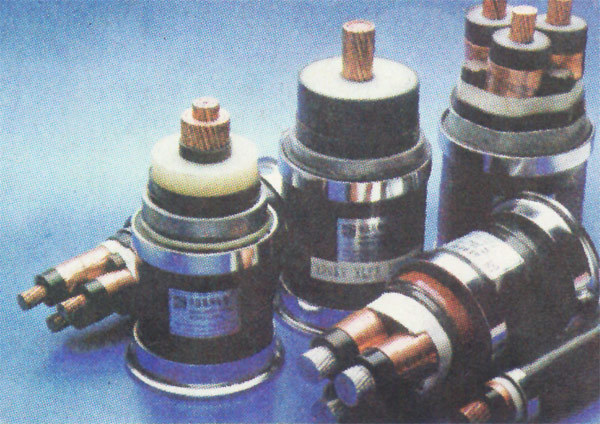
Generally speaking, the basic structure of the cable is the conductor, the insulation layer and the outer sheath. According to the requirements, some structures are added, such as shielding layer, inner sheath or armor layer, and some filling materials (PP rope, juet rope, etc.) to make the cable more round. The conductor is the carrier of current or signal transmission, and other structures are used for protection. Today, wire and cable manufacturers to talk about the basic structure of the cable.
1. Conductor
Its function is to conduct current. There are solid core and twisted core. Materials include copper, aluminum, aluminum alloy, silver, copper clad steel, aluminum clad steel, etc. Mainly copper and aluminum. Copper is much more conductive than aluminum. According to national standards, the resistivity of copper is not more than 0.017241 mm2/m(20), and the resistivity of aluminum is not more than 0.028264 mm2/m(20).
2. Refractory layer
Wire and cable manufacturers said that only fire-resistant cables have this structure. Its function is that the cable can withstand a certain period of time in the fire, giving people more time to use electricity when they escape. The material used now is mainly mica tape. In a fire, the cable will burn quickly, because the mica tape has high temperature resistance and insulation functions, which can protect the conductor from running for a certain period of time in a fire.
3. Insulation layer
Outside the coated conductor, its function is to isolate the conductor, withstand the corresponding voltage, and prevent current leakage. There are many kinds of insulation materials. An important property of these materials is good insulation properties. Other performance requirements vary according to the requirements of the cable. Some require low dielectric coefficient to reduce loss, some require flame retardant performance or high temperature resistance, some require that the cable will not produce smoke or harmful gases when burning, some require oil and corrosion resistance, and some require soft.
4. Shielding layer
Outside the insulating layer, within the outer protective layer, the effect is to limit electric fields and electromagnetic interference.
5. Filler
Wire and cable manufacturers pointed out that the role of filling is mainly to make the cable round, the structure is stable, and some cable fillers also play a role in waterproof and fireproof. The main performance requirements are non-hygroscopic materials and non-conductive.
6. Inner protective layer
The role of the inner sheath is to protect the insulated core from damage by the armor or shield.
7. Armor layer
The armouring layer serves to protect the cable from external forces.
8. Outer sheath
Components that protect the outer layer of the cable.
The above is the basic structure of the cable introduced by the wire and cable manufacturers. In fact, the main insulation of the cable has the special function of bearing the working voltage of the system software. During the service life period, it should bear the rated current and the overvoltage when the system is abnormal for a long time to ensure that there is no relative or two-color penetration short circuit fault under the condition of burning during work. The main insulation of the cable and the metal material of the grounding device shield the middle connection, so that there is close contact, the porosity in the middle of the electrical conductor; The effect of removing the copper foil surface of the grounding device.
Related News

- All
- Product Management
- News
- Introduction
- Enterprise outlets
- FAQ
- Enterprise Video
- Enterprise Atlas

WeChat Public Number
International Business:0871-67334199
Business fax: 0871-6738 8841
Sales Phone:18213841134(Liu Zong)0871-67388840
Company Headquarters: 11th Floor, Tower 1, Dongju Jiaxin Business Center, Guandu District, Kunming City, Yunnan Province
Production base: Xiaoshao and other areas of Qidian Industrial Park, Chenggong District, Kunming City, Yunnan Province


Copyright: Kunming kunbao wire and cable manufacturing co., LTD. Website construction:www.300.cn Kunming Privacy Policy